Most industrial accidents involving machinery are preventable. Yet, every year, workers are injured or killed during maintenance because energy sources weren’t properly isolated. The solution? A clear, actionable lockout tagout (LOTO) procedure. And while OSHA mandates written energy control programs, many companies struggle to create them—especially without legal or safety expertise. That’s where a free lockout tagout procedures template becomes essential.
This guide delivers not just a downloadable framework, but a working blueprint tested in real maintenance environments. You’ll get a structure that aligns with OSHA 29 CFR 1910.147, avoids common compliance pitfalls, and scales from small workshops to large manufacturing plants.
Why a Generic LOTO Template Isn’t Enough
A free lockout tagout procedures template can jumpstart your safety program—but only if it’s adaptable. Many downloadable forms online are too vague: “Isolate energy source” or “Apply lockout device” don’t tell a technician how or which valves, breakers, or bleed points to use.
Real-world effectiveness depends on machine-specific detail. Consider a hydraulic press. A proper LOTO procedure must specify: - Exact circuit breaker location (e.g., Panel B3, Breaker 12) - Sequence for relieving residual pressure - Lock application points on disconnect switches and hydraulic lines - Verification method (e.g., try-start test only after visual confirmation)
A template that doesn’t allow for this level of granularity fails its primary purpose: preventing injury.
Key Insight: OSHA doesn’t require you to use a government template. It requires your procedures to be specific, documented, and followed. Use a free template as a scaffold, not a final product.
Core Components of an Effective LOTO Procedure Template Before downloading any free lockout tagout procedures template, ensure it includes these non-negotiable elements:
1. Equipment Identification Each procedure must begin
with unambiguous identification:
- Machine name and model
- Location (e.g., Production Line 2, South Wing)
- Unique ID number (critical for audit trails)
2. Energy Types Present List all hazardous energy sources:
- Electrical (voltage level)
- Hydraulic/pneumatic pressure
- Gravitational (e.g., raised components)
- Chemical or thermal energy
Example: A conveyor system may have electrical drive motors, tensioned belts (mechanical), and residual heat in bearings.
3. Step-by-Step Lockout Sequence
- This is the operational core. Use active, imperative language:
- Shut down conveyor via control panel E-07.
- Open disconnect switch at Junction Box 5.
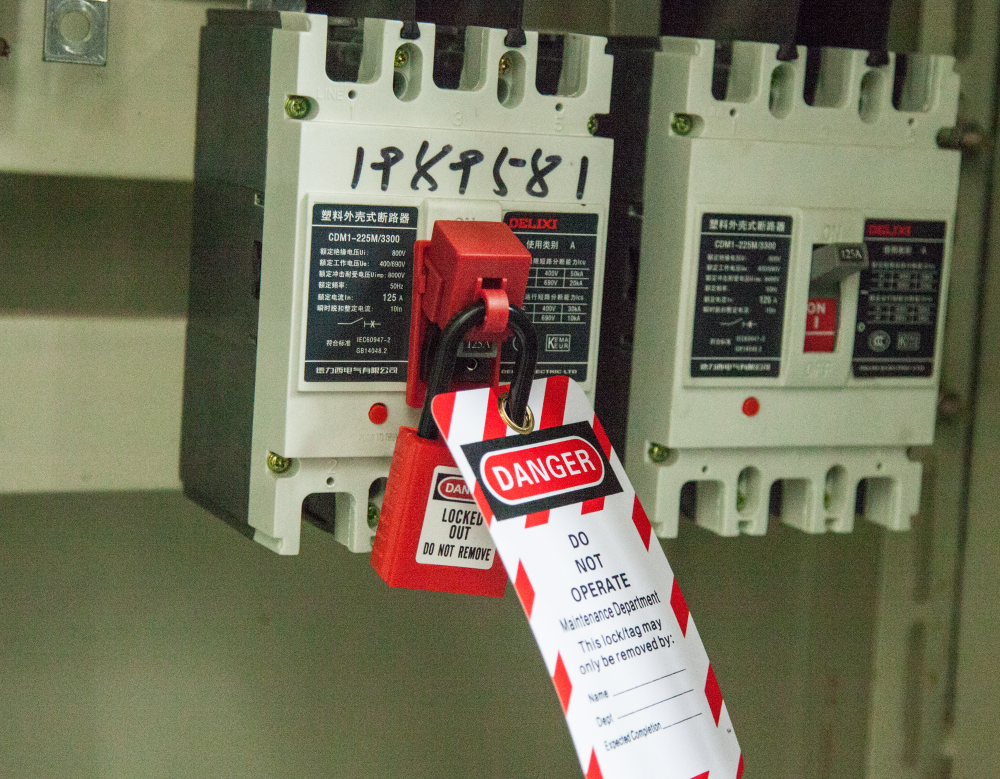
- Apply personal lock and tag to switch handle.
- Depressurize air lines at Valve A2 (bleed point).
- Verify zero energy: attempt to restart using control panel (no motion allowed).
4. Authorized Personnel Section Specify who can perform the lockout. Include:
- Name and role
- Training verification date
- Contact info
5. Group Lockout Coordination For team maintenance, the template must support:
- Primary authorized employee (lead)
- Individual lock application
- Group lockbox use with checklist
6. Release and Restoration Steps Equally important: how to safely restart. - Confirm all tools removed - Ensure guards reinstalled - Notify affected employees - Remove locks only by original installer
Free LOTO Template: Downloadable Structure
Below is a practical, editable structure you can adapt today. This is not a one-size-fits-all form, but a working framework that meets compliance requirements and real shop-floor needs.
markdown
LOCKOUT TAGOUT PROCEDURE
Equipment: [Name, Model, ID] Location: [Building, Line, Zone] Prepared By: [Name, Title] Date Created: [MM/DD/YYYY] Last Reviewed: [MM/DD/YYYY]
Energy Sources to Control
- [ ] Electrical – [Voltage, Panel ID]
- [ ] Hydraulic – [Reservoir, Valve ID]
- [ ] Pneumatic – [Line pressure, bleed point]
- [ ] Mechanical – [Spring tension, counterweights]
- [ ] Thermal – [Component, temp range]
Step-by-Step Lockout Procedure
- [Action: e.g., “Shut down using E-Stop button at Station 3”]
- [Action: “Open disconnect switch at Panel B2”]
- [Action: “Attach lockout hasp and apply personal lock”]
- [Action: “Bleed hydraulic pressure at Port H4”]
- [Action: “Verify isolation: attempt startup. No movement allowed.”]
Release Procedure
- Confirm all personnel clear of equipment.
- Verify guards and safety devices reinstalled.
- Remove personal lock only by installer.
- Notify operations team before restart.
Authorized Personnel
| Name | Role | Training Date | Contact |
|---|---|---|---|
This template is plain text or Word/PDF editable—no login or email required. Use it as a starting point, then customize per machine.
Where to Find Trusted Free LOTO Templates
Not all free templates are equal. Many are outdated or incomplete. Here are five reliable sources that offer genuinely useful, downloadable LOTO procedure frameworks:
| Source | Format | Machine-Specific? | OSHA-Aligned | Notes |
|---|---|---|---|---|
| OSHA.gov | PDF, Word | No (generic) | Yes | Official, but requires customization |
| Grainger | Partial | Yes | Clean layout, includes checklist | |
| Creative Safety Supply | Editable PDF | Yes (with add-ons) | Yes | Visual icons, good for training |
| SafetySkills | Word Template | Yes | Yes | Includes group LOTO section |
| CDC/NIOSH (via NIOSH website) | DOCX | Yes | Yes | Research-backed, ideal for healthcare and labs |
Pro Tip: Always cross-check any free template against OSHA 1910.147 Appendix A, which outlines minimum procedural requirements.
Avoid sites that require email registration just to download a basic form. If the template hides behind a paywall or demo request, it’s not truly free.
Common Mistakes That Invalidate LOTO Procedures
Even with a solid template, errors undermine safety. These are the most frequent problems observed in audits:
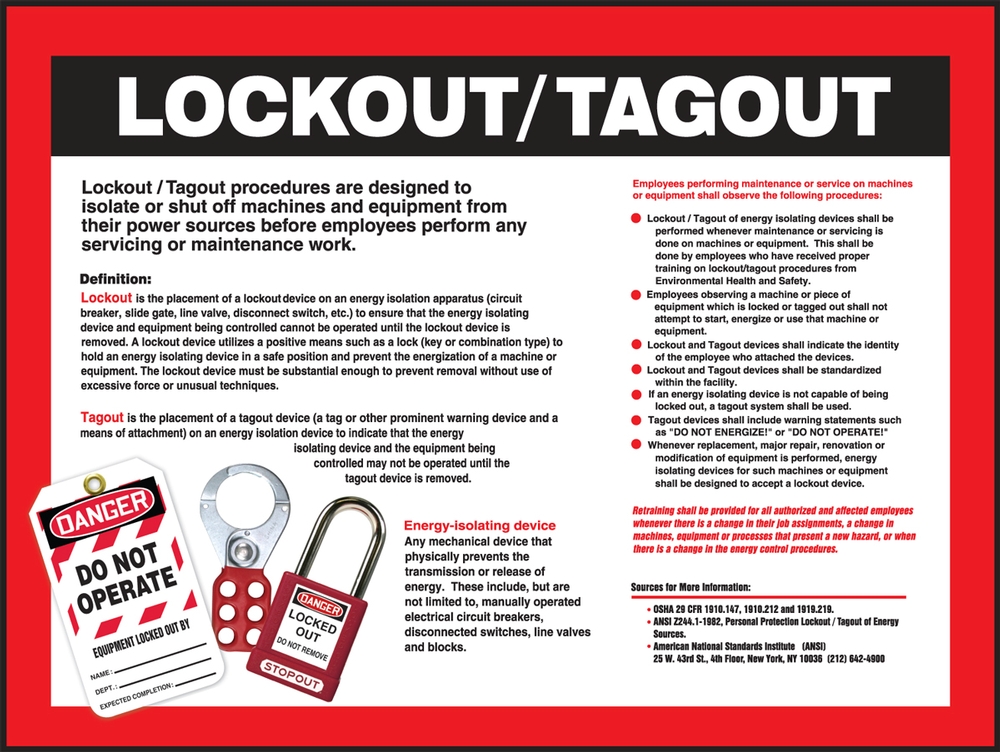
1. Using Tags Without Locks Tagout alone is insufficient unless full LOTO is infeasible. Tags can be ignored; locks physically prevent energizing.
2. Skipping Verification Steps "Assuming" energy is isolated is deadly. The verification step—attempting to restart—is mandatory.
3. Blank or Outdated Templates A LOTO form with missing data isn’t a procedure. Treat it like a work permit: incomplete = invalid.
4. No Employee Retraining Schedule OSHA requires annual retraining. Note the next training date on each procedure.
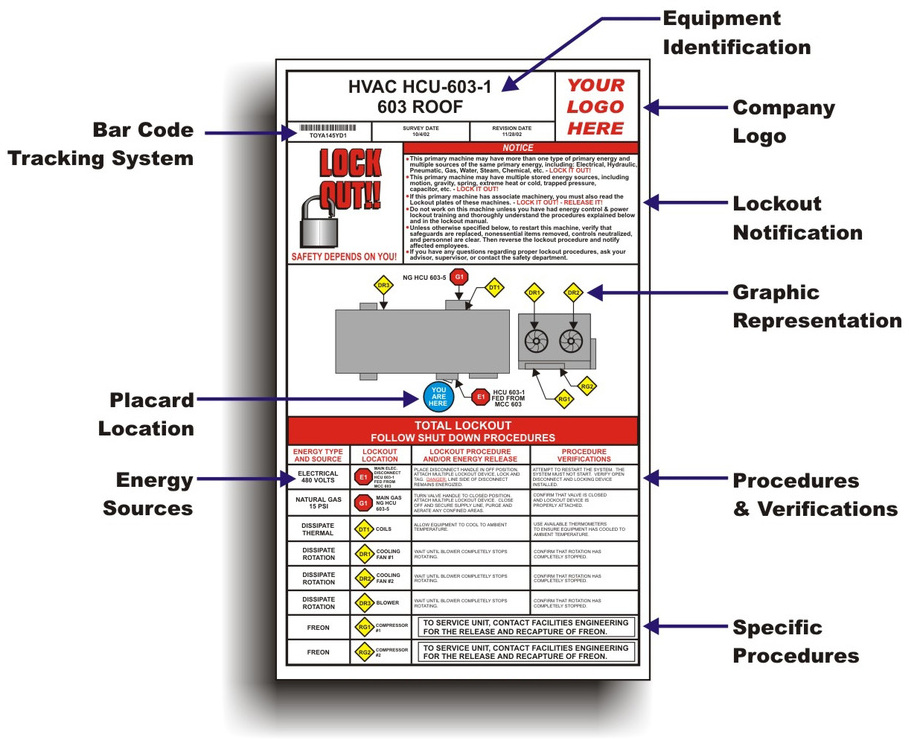
5. Poor Visual Support Add diagrams or photos showing exact lock points. A picture of Junction Box 5 beats vague text.
Real-World Use Case: Implementing LOTO in a Food Processing Plant
A Midwest dairy processor used a free LOTO template from NIOSH as a baseline. They customized it for their pasteurizer, which had electrical, steam, and mechanical hazards.
Challenges: - Multiple shift teams - High washdown environment (locks must be corrosion-resistant) - Temporary contractors
Solution: - Added machine photo with labeled lock points - Used waterproof tags and stainless-steel locks - Implemented a group lockbox at the central control panel - Trained supervisors to audit LOTO compliance weekly
Within six months, near-miss reports during maintenance dropped by 70%. The free template wasn’t the magic fix—but it provided the consistent structure that enabled standardization.
How to Customize Your Free LOTO Template
Start with a template. Finish with a living document. Follow this workflow:
- Select 3 high-risk machines (e.g., press, mixer, conveyor).
- Map all energy sources with maintenance leads.
- Write procedures using the template structure.
- Test the procedure in a shutdown window—have a tech follow it exactly.
- Revise based on feedback (e.g., missing bleed point).
- Train all authorized employees on the new process.
- Review annually or after equipment changes.
Store finalized procedures near the machine (e.g., laminated copy in a weatherproof pouch) and in a digital safety management system.
Final Thoughts: Safety Is a Process, Not a Document
A free lockout tagout procedures template is a tool—not the end goal. Compliance comes from consistent execution, not perfect paperwork. But without a clear, written process, even experienced technicians can make fatal mistakes.
Use the structure provided here to build machine-specific procedures. Download from trusted sources. Test, train, and revise. Turn your LOTO program from a compliance checkbox into a culture of safety.
Start today: pick one machine, pull up the template, and write the first procedure. Someone’s life may depend on it.
Frequently Asked Questions
Where can I get a lockout tagout procedures template for free? Reputable sources include OSHA.gov, CDC/NIOSH, Grainger, and Creative Safety Supply. Always verify the template includes OSHA-required elements like energy types and verification steps.
Is a free LOTO template OSHA-compliant? Only if properly customized. OSHA doesn’t approve templates—your procedures must be specific to equipment and consistently followed.
Can I use the same template for all machines? Yes, for structure. But each machine must have its own filled-out procedure. Never reuse a completed form across different equipment.
Do I need to include photos in my LOTO procedure? Not required, but highly recommended. Visuals reduce errors, especially for lock point locations and complex systems.
Who should write the LOTO procedures? Authorized employees familiar with the equipment, often maintenance supervisors or safety officers. Worker input improves accuracy.
What’s the difference between lockout and tagout? Lockout uses a physical lock to prevent energizing. Tagout uses a warning tag. Lockout is required when possible; tagout alone is only allowed with an energy control justification.
How often should LOTO procedures be reviewed? Annually, or whenever equipment, processes, or personnel change. OSHA mandates periodic inspections of procedures and practices.
FAQ
What should you look for in Free Lockout Tagout Procedures Template Guide for Safety Teams? Focus on relevance, practical value, and how well the solution matches real user intent.
Is Free Lockout Tagout Procedures Template Guide for Safety Teams suitable for beginners? That depends on the workflow, but a clear step-by-step approach usually makes it easier to start.
How do you compare options around Free Lockout Tagout Procedures Template Guide for Safety Teams? Compare features, trust signals, limitations, pricing, and ease of implementation.
What mistakes should you avoid? Avoid generic choices, weak validation, and decisions based only on marketing claims.
What is the next best step? Shortlist the most relevant options, validate them quickly, and refine from real-world results.